 +1 (908) 280-4128

 Catalog
 Apparel
 Beauty
 Health
 Sauna
Sauna
 Login or register
 Product catalog
 Specials
 +1 (908) 280-4128
  Language:
The Science Behind Hair Porosity: How to Choose Products That Actually Work
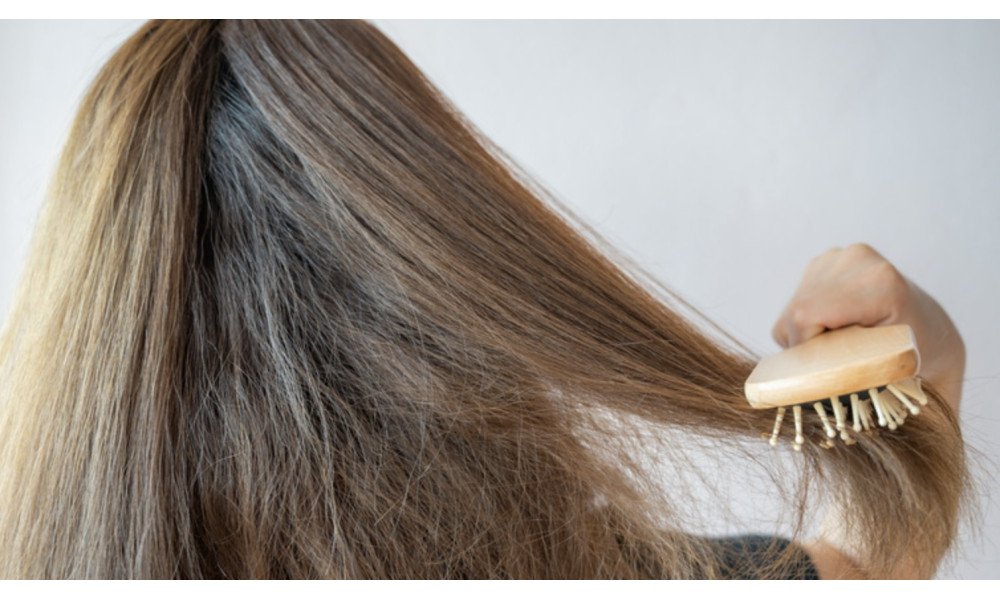
Healthy and beautiful hair is what makes the whole appearance attractive. Its natural gloss depends on a couple of factors, with hair porosity type among them. Yet, do you know what hair porosity is, what type of porosity you have, and how to take care of your locks depending on porosity type? That’s what we decided to explain in detail in our Univermag blog.
What Is Hair Porosity and What Types Does It Have
For a better understanding of hair porosity and its three main levels, it’s essential to gain a basic understanding of what our hair is composed of. The structure of hair has small scales on its external level. These scales are called cuticles, and their main task is to allow moisture to enter the hair shaft and then retain it within. That is, cuticles help hair remain hydrated, which contributes to its flexibility, resistance to damage, and overall beauty.
When your hair is well-hydrated, it won’t look limp, and it won’t get any harm from cold or hot temperatures, sun, wind, styling, or use of hair accessories. At once, hair cuticles can have various structures from very tight to very open, and their structure defines, namely, the level of porosity.
There are three main levels of hair porosity, according to the structure of the cuticles:
- High-porosity hair has widely open cuticles, and this helps to absorb moisture quickly, but it also allows moisture to be lost similarly quickly. Often, curly people have hair with high porosity. Also, high porosity occurs in hair which suffers from inappropriate care, regular hair dye, and intense styling (for example, when you regularly use a straightener, hair curler, or dry hair under high temperature).
- Medium-porosity hair has its cuticles slightly open, which helps moderate moisturizing, yet retains moisture well. Such hair type is often considered normal, yet it is sensitive to mechanical damage.
- In low-porosity hair, the scales are held tightly, which helps retain moisture better. Typically, this hair type looks healthy and glossy, but low porosity also makes hair resistant to dying and styling. Besides, it requires more time for drying.
How Porosity Affects Moisture Absorption and Retention: Some Scientific Backgrounds
Normally, hair consists of 78% of protein and 15% of water. Yet, this balance can simply be broken by the condition of the cuticles. If you wonder how porosity affects moisture absorption and retention, its main effects on hair are as follows:
- Porosity defines the type of hair: straight hair typically is low-porosity, while curly hair often has high porosity. If your hair frizzes up on a rainy day or slightly curls, you probably have medium-porosity hair.
- It also contributes to hair resilience. The higher the hair porosity, the more sensitive it is to heat, cold, and mechanical damage. Hair with low porosity won’t be damaged by a simple scrunchie, but for high-porosity hair, it can do harm and break it.
- Porosity also impacts hair's resistance to styling and coloring. Hair with low porosity poorly absorbs dye pigments, chemicals for hair perming, and styling procedures. Medium-porosity hair is prone to styling, and it can be colored without considerable harm. High-porosity hair dries quickly and can easily be combed and styled, but it is very sensitive to all kinds of styling and dying.
So, due to various levels of moisture absorption and retention, three porosity types determine the overall approach to hair care and styling.
Defining Your Hair Porosity Type
Of course, the most effective way to decide on your hair’s porosity type is to apply for a trichologist’s consultation. Professionals evaluate hair accurately, defining its type and porosity levels using special lab tests.
Yet, you still can test your locks for porosity in a DIY mode. How to determine your hair porosity at home?
- A glass of water test. Take a glass of water and pick up one hairspring from your hair. Pull it into water and watch what happens. If the hairspring drowns quickly, it possibly has high porosity. If it floats at the surface, it probably has low porosity. A medium-porosity hairspring will remain in the middle between the surface and the glass bottom.
- Type of hair as a test for porosity: people with curly hair can have high porosity, and straight hair owners often have low porosity. People with medium porosity may have slightly curly hair.
When deciding to use these methods, please keep in mind some common mistakes people make when testing porosity. These are:
- Using a hairspring which has fallen out long before for a glass of water test. It has lost moisture naturally if it has fallen out. Take a newly-pulled out hairspring for your test.
- Determining porosity level only by hair type can lead to false results.
Bad hair care, hormonal imbalances, or even seasonality often impact porosity levels, and they can change over time. That’s why it is better to combine these two methods to get more accurate results.
Selecting the Best Products for Low, Medium, and High Porosity Hair
Hair porosity levels require a different approach to daily care, starting with the hair care products. Let’s briefly consider the list of ingredients to look for and ingredients to avoid when choosing hair care products for a certain hair porosity level.
The best products for low, medium, and high porosity hair are as follows:
- For low-porosity hair, a perfect match is products with coconut oil, which nurtures it greatly, and with aloe vera, glycerin, and honey – the components that moisturize it effectively.
- Medium-porosity hair will be happy with products containing essential oils, which soften hair.
- High-porosity hair requires the same essential oils (i.e. sweet almond oil or mango oil) for softening and silk proteins and keratin for smoothing them and nurturing.
As for the taboos for various porosity levels, we can name the following ones:
- For medium-porosity and high-porosity hair, SLS/SLES sulphates, Isopropyl Alcohol, parabens and formaldehyde are harmful because they over-dry hair and make it heavier.
- For low-porosity hair, silicones, mineral oils, and all components that cannot be absorbed quickly are harmful because they create a greasy layer and make hair look dull and glazed.
Daily Care Tips Based on Your Porosity Type
Besides the right selection of hair care products, your daily care routines also matter. So, for different porosity types, it should be different. Let’s learn how to build a porosity-optimized routine for your hair care.
Low Porosity-Optimized Routines
- Do not overload hair with hair care products, especially hair masks, conditioners, or leave-in products.
- Use hair shampoo with a low amount of softeners.
- Use moisturizing balms.
- Make it a routine to use oils with non-saturated acids once a week (coconut oil, Omega-3 or Omega-6 oils, shea butter).
Medium Porosity-Optimized Routines
- Select balms and masks with softeners and proteins for daily care.
- Do not forget to protect hair tips with special protective products.
- Use oils with monounsaturated acids twice a week (avocado oil, argan oil).
High Porosity-Optimized Routines
- Use hair shampoos with softeners and proteins regularly.
- Do not forget to protect hair tips, especially before coming outdoors.
- Use oils with polyunsaturated acids 1-2 times a week (almond oil, mango oils).
We hope that our article will help you better understand your actual hair needs. Pick up our tips and recommendations to build your porosity-optimized routines and make your hair healthy and glossy. Besides, we welcome you to the Univermag catalog where lots of useful hair care products are available for you. Let’s make hair porosity your ally instead of fighting it.